Ecommerce & Fulfillment
SOP PlaybookBlack Friday Returns Playbook
Return fraud and chargeback defense kit for DTC ecommerce operators.
What's in the kit
- Risk Scoring Worksheet: flags serial returners before BFCM opens, using your own order data
- Decision Tree Checklist: gives staff five exact outcomes — no founder approval needed per ticket
- Policy + Comms Templates: return policy page and denial language that prevents wardrobing disputes
- Chargeback Defense Guide: 72-hour representment checklist when ecommerce return rate disputes escalate
The situation
Why this kit exists.
If you're running an ecommerce store into BFCM with a return rate above 15%, you already know the math doesn't work. The goal of this kit is to reduce return fraud ecommerce without chargebacks — and to do it in a way your VA or support staff can execute without calling you for every decision. The policy trap most DTC operators fall into isn't being too generous or too strict — it's having no written decision rule at all, which means every return gets approved because the person handling tickets has no authority to say no.
This kit includes four assets: the Black Friday Returns Playbook PDF (the core operating guide), a Return Request Decision Tree and Approval Checklist, a Returns Policy Page and Customer Communication Templates doc, and a Return Fraud Risk Scoring and Pattern Detection Worksheet. Everything is ready to edit and deploy.
Here's how you use it. You open the Risk Scoring Worksheet first and run your last 90 days of return data through it. The worksheet scores each customer on a 0–10 scale across seven return reason categories — SIZING, QUALITY_DEFECT, CHANGED_MIND, DAMAGED_IN_TRANSIT, NOT_AS_DESCRIBED, SUSPECTED_WARDROBING, and SERIAL_PATTERN — and buckets them into LOW (0–3), MEDIUM (4–6), or HIGH (7–10) risk tiers. Anyone above the serial returner threshold (3 or more return requests in a rolling 90-day window, or a lifetime return rate above 40%) gets flagged before BFCM opens. Then you drop the Decision Tree into your helpdesk — Gorgias, Zendesk, whatever you're running — and your support staff has five clear outcomes to choose from: APPROVE_REFUND, APPROVE_EXCHANGE, OFFER_STORE_CREDIT, DENY_WITH_REASON, or ESCALATE_TO_FOUNDER. The communication templates cover each outcome so the response goes out in your brand voice, not a form letter. The policy page template sets your standard 30-day return window, your 15% restocking fee structure (waived for store credit or exchange), and a tighter 21-day window for any SKU launched in the prior 90 days. If a chargeback comes in anyway, the playbook walks you through the 72-hour representment window and what evidence to pull.
This kit was built because a 22% return rate on a new product line with a $4.17 per-order contribution margin is not a customer service problem — it's a unit economics emergency. The playbook exists because the answer to that emergency is a written operating rule, not a policy conversation with your VA every time a ticket comes in.
One objection worth addressing: tightening your return policy does not mean losing good customers. Jordan — the first-time buyer who got a defective item — gets a fast, clean resolution because the Decision Tree routes QUALITY_DEFECT and DAMAGED_IN_TRANSIT to immediate approval. The policy protects Jordan. It flags Marcus. That distinction is the entire point.
If BFCM is inside five weeks and your return policy is still 'approve everything to avoid escalation,' this is the kit to fix that before the volume hits.
What's inside
Every file. What it does.
-
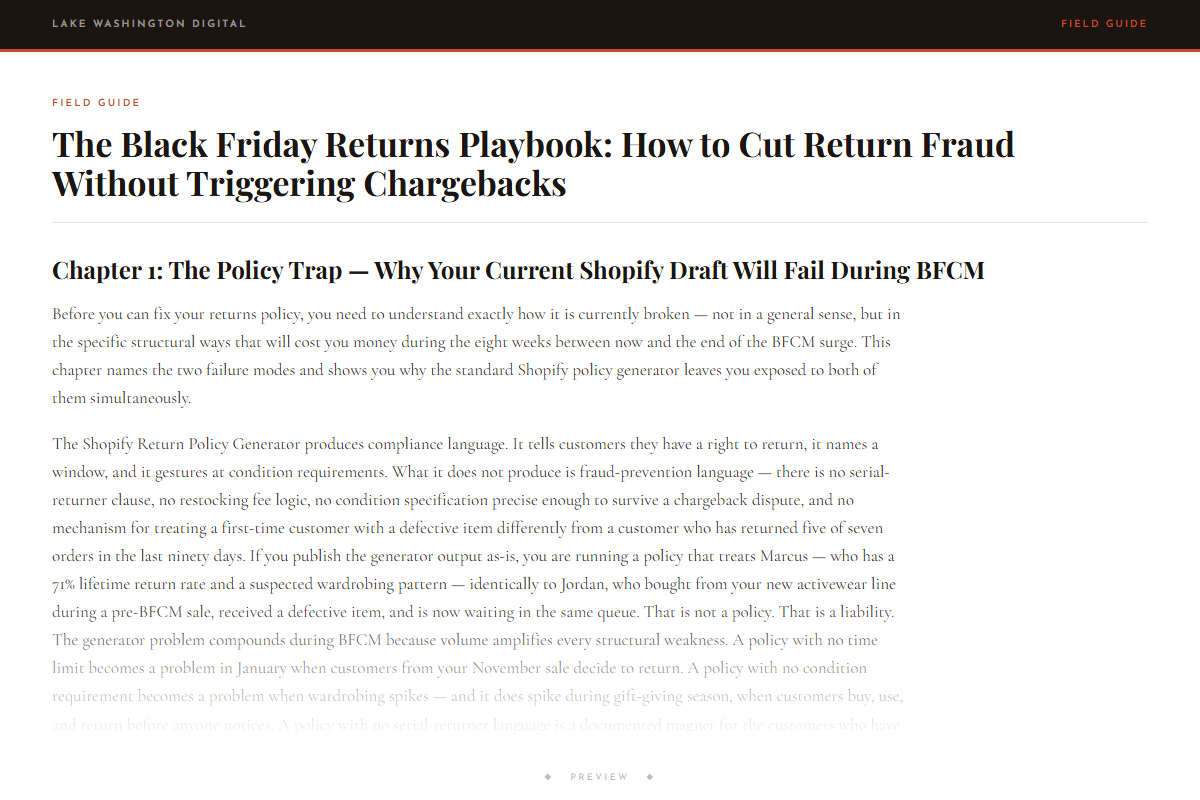
The Black Friday Returns Playbook: How to Cut Return Fraud Without Triggering Chargebacks
-
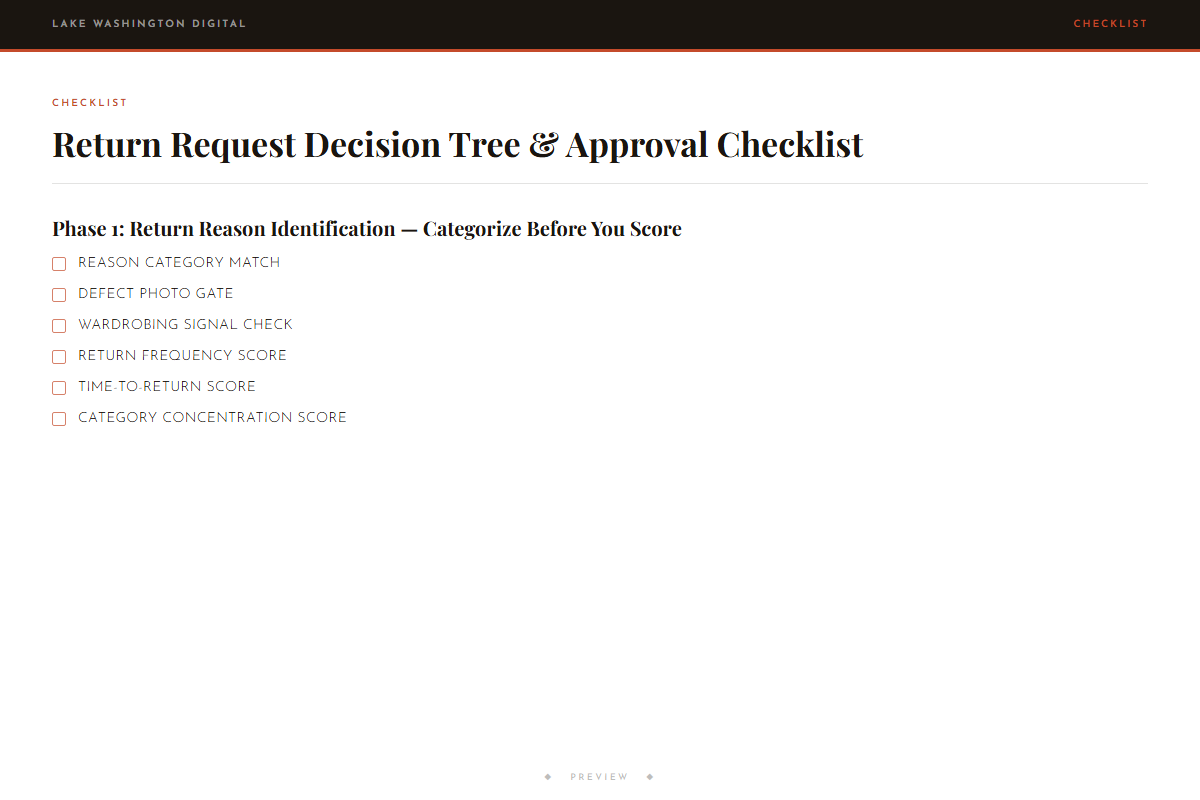
Return Request Decision Tree & Approval Checklist
-

Returns Policy Page & Customer Communication Templates
-
Return Fraud Risk Scoring & Pattern Detection Worksheet
Who this is for
You'll get immediate use from this if…
- DTC founders on Shopify or similar platforms whose ecommerce return rate too high fix is overdue — especially heading into BFCM with compressed per-order contribution margin on newer SKUs.
- Solo operators and small ecommerce teams using a VA or part-time support staff who need written decision rules so returns get handled consistently without founder involvement on every ticket.
- Ecommerce store owners who want to know how to deny fraudulent returns safely — without the denial triggering a chargeback or a social media complaint from a legitimate buyer.
Questions
Before you buy.
- How do I stop serial returners from gaming my store before Black Friday?
- The Risk Scoring Worksheet runs your last 90 days of return data and flags anyone who hits the serial returner threshold — 3 or more return requests in a rolling 90-day window, or a lifetime return rate above 40% of orders placed. You get a tiered risk list before BFCM opens, so you're not discovering the pattern after the volume hits.
- What return policy protects against sizing abuse specifically?
- The playbook includes a SIZING category in the return reason taxonomy with specific scoring rules. Repeat SIZING claims from the same customer within a short time-to-return window score higher on the fraud risk scale. The policy page template also includes language for your 21-day return window on new product lines, which limits the exposure window on sizing-heavy SKUs.
- Can I deny returns for wardrobing without losing customers?
- Yes, if the denial is documented and delivered correctly. The communication templates include a DENY_WITH_REASON response that references your written policy — not a judgment call. Customers who are genuinely wardrobing rarely escalate when the denial cites a clear, pre-published rule. Legitimate customers get routed to APPROVE or OFFER_STORE_CREDIT before they ever see a denial.
- How do I catch return fraud before it hits chargebacks?
- The Risk Scoring Worksheet is the pre-chargeback layer. It identifies HIGH-risk customers (7–10 points) before they're approved for a refund. If a chargeback comes in anyway, the playbook covers the 72-hour representment window and the specific evidence — order confirmation, delivery confirmation, return history, prior communications — you need to submit.
- What return policy rules let my staff approve returns consistently without calling me?
- The Decision Tree gives your staff five defined outcomes — APPROVE_REFUND, APPROVE_EXCHANGE, OFFER_STORE_CREDIT, DENY_WITH_REASON, ESCALATE_TO_FOUNDER — mapped to specific return reason and risk score combinations. ESCALATE_TO_FOUNDER is reserved for edge cases. Everything else has a written rule your VA can follow without a judgment call.
More in Ecommerce & Fulfillment
Other kits for this situation.
Black Friday Returns Playbook
Deploy the same day you download it.